Building a Museum Tech Stack That Actually Talks to Itself
Why seamless integration not more software is the key to digital maturity in museums.

What Happens When Museum Systems Don’t Communicate?
When ticketing, fundraising, and membership systems run separately, museums lose visibility. Staff juggle spreadsheets instead of strategy, and visitor data fragments across silos. The true cost of fragmented technology is operational drag time, accuracy, and insight all eroded by systems that refuse to talk.
Most museums today aren’t short on software; they're drowning in it. Ticketing systems that don’t sync with CRMs. Donor databases that can’t see membership data. Education booking tools that live in their own silo.
The result? Staff members who spend more time maintaining spreadsheets than interacting with audiences, duplicate work, and broken visitor records. The true difficulty lies in integrating technology, not in embracing it. Creating a self-talking museum technology stack is essential for clarity, donor intelligence, and visitor loyalty.
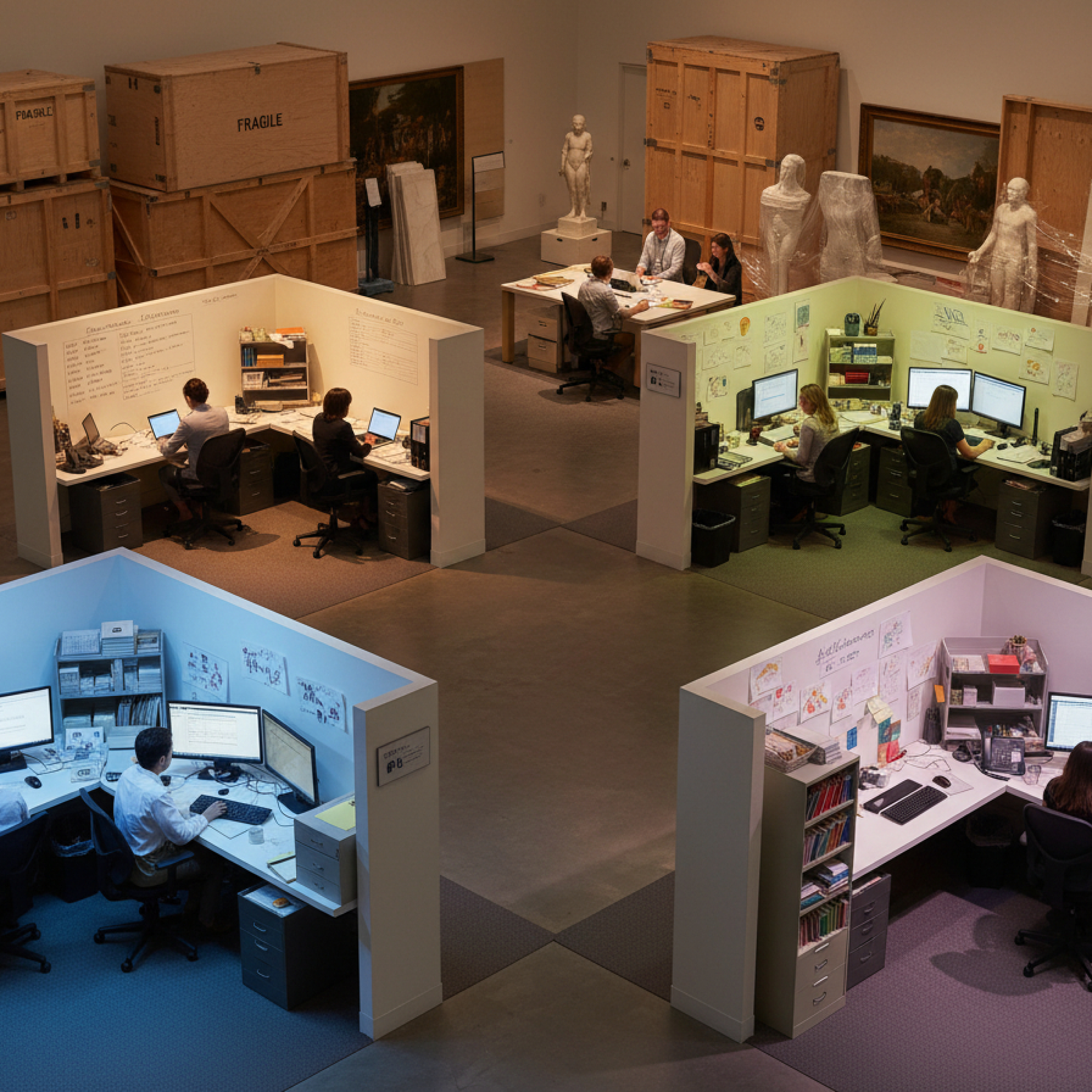
Why Did Museums End Up With So Many Digital Silos?
Because most adopted technology reactively adding one system at a time to fix immediate problems. Over years, those point solutions became isolated silos.
A development department may track donations in one platform while visitor services use another for ticketing. When combined, they provide blind spots, yet each one functions well on its own. Begin by charting the data pathways at the points where information starts, travels, and ends. Is It Better to Make Your Current Tools Complement Each Other or Add New Ones? Smarter integration, not more platforms, is what progress is all about.
Should You Add More Tools or Make the Ones You Have Work Together?
Progress doesn’t mean more platforms; it means smarter integration.
Every new system should connect seamlessly to your CRM or expose clear APIs for future data exchange.
Ask every vendor: “Can your platform share real-time data with the tools we already use?”
If the answer stalls, integration will too. Fewer, interoperable systems outperform crowded stacks every time.
Why Centralize the Visitor Record?
Because a unified record turns transactions into relationships.
Every successful museum IT stack relies on a single source of truth that connects memberships, events, ticket sales, and donations. Without it, teams decide from fragments. With it, development, marketing, and education all see the same visitor the same story at once.
How Do You Eliminate the “Excel Middleman”?
If reconciliation still depends on exports and spreadsheets, your systems aren’t integrated; they're merely adjacent.
Manual stitching wastes hours and invites errors. Replace it with automated data flow.
Staff members can devote more time to mission-driven initiatives like community development, education, and improving Visitor experience when integration eliminates tedious.

Why Build for Flexibility Instead of Vendor Lock-In?
Digital longevity requires agility, not dependency.
Open standards, modular architecture, and flexible APIs not proprietary cages are the foundation of true interoperability. Select systems that can adapt to your approach so that a change in direction tomorrow doesn't require a rebuild today. Instead of shattering beneath change, a flexible stack bends.
What Kind of Technology Partner Do Museums Actually Need?
One that speaks museum language mission, community, education not corporate jargon.
That’s why Veevart stands apart. It was created specifically for museums and integrates CRM, memberships, fundraising, ticketing, and courses into a unified ecosystem. Employees stop managing systems and begin managing impact when technologies organically exchange data.
How Should Integration Success Be Measured?
Not by technical specs but by staff capability.
When fundraising instantly sees visitor purchase behavior or education identifies repeat donors in workshops, integration is real. APIs are promises; empowerment is proof.
Measure success through connected decisions, not connected software.
Conclusion: Why Integration Is the Real Innovation
The goal of museum technology innovation is to make sure your current apps communicate with one another, not to chase new ones. Your organization obtains clarity, which no vendor can offer, when tickets, fundraising, membership, and CRM data all work together flawlessly.
And clarity builds trust within teams, boards, and the visitors who feel recognized every time they return.